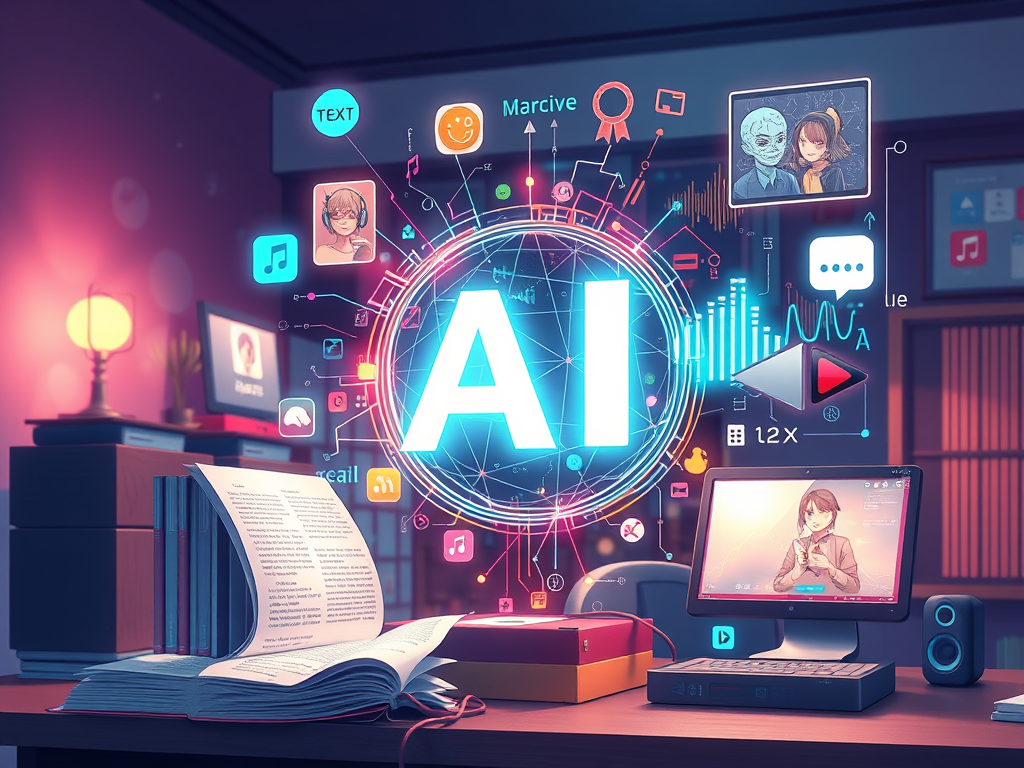
For years, AI was mostly text talking to text. Then models started seeing images. Now they’re watching videos, listening to audio, and reasoning across it all simultaneously.
This multimodal shift changes what AI can actually do. A lot.
The Jump from Words to Worlds
Single-modality AI was powerful but narrow. Language models reasoned about text. Vision models classified images. Each lived in its own silo.
Multimodal systems combine them. GPT-4V processes text and images together. Google’s Gemini handles text, images, audio, video. The result isn’t just “more inputs.” It’s reasoning that crosses boundaries — understanding a photo by reading its caption, analysing a video by hearing its dialogue, interpreting a document by seeing its charts.
The pattern worth noting: this is how humans actually work. We don’t experience text in isolation from images, or audio separately from context. Multimodal AI starts matching that reality.
Enterprise Applications Emerge
Healthcare connects medical images with patient records, treatment notes, even doctor audio notes. A single system that sees the scan, reads the history, and understands the context.
Manufacturing combines visual inspections, equipment sensors, and maintenance logs. A model that sees wear patterns, reads error codes, and hears unusual vibration frequencies.
The conversation worth having: when a model understands the full context of a situation — not just one slice of it — what decisions become newly possible?
Why Cross-Modal Reasoning Matters
A text-only model reading “engine temperature exceeded threshold” flags an alert.
A multimodal model seeing the thermal camera feed, reading the maintenance log, and hearing the vibration pattern might say: “Temperature spike is coolant system failure, not sensor error. Last maintenance was 18 months ago. Recommend immediate shutdown.”
That’s not just more data. That’s reasoning across modalities to reach a conclusion neither modality could reach alone.
The lens worth applying: many enterprise problems aren’t solved by smarter text analysis. They’re solved by connecting existing signals that were previously siloed.
The Organizational Implications
Teams building with multimodal AI face a specific challenge: managing much richer context.
Success tends to look like:
- Focused applications where multiple signals genuinely matter
- Clear evaluation of what “good” reasoning across modalities looks like
- Human loops where the model proposes cross-modal insights, humans validate
The interesting work isn’t building general multimodal platforms. It’s finding the specific enterprise problems where cross-modal reasoning unlocks something genuinely new.
A New Baseline for Understanding
Multimodal AI doesn’t just process more data types. It starts to understand situations more like the people working in them do.
That’s the shift worth paying attention to. When AI can see, hear, read, and reason across what it perceives — and when that reasoning actually proves useful — the line between “tool” and “teammate” starts to blur.
What’s the multimodal combination in your world — video+audio, image+text, sensor+log — that could unlock genuinely new insight if someone built it?
Let’s keep learning — together.


 harish.balasubramanian
Share your thoughts