Build-measure-learn hasn't expired. But when your product learns from data and surprises you in production, the loop needs some new steps.
The Lean Loop Still Works. It Just Needs New Questions for AI
Learning is forever
Build-measure-learn hasn't expired. But when your product learns from data and surprises you in production, the loop needs some new steps.

Cloud access has democratised quantum experimentation. The hype is finally settling into something more useful — a clearer view of what quantum actually does.

AI models are running on factory floors, hospital devices, and store shelves. The shift from cloud-only to edge deployment changes everything.

Responsible AI frameworks are everywhere. Implementation is not. The gap between principles and practice is where the hardest decisions actually live.

Microsoft’s G42 deal shows AI partnerships are no longer just commercial moves. They’re starting to look a lot like geopolitics with GPUs.

FTX collapsed in November 2022 with $8.9 billion in customer funds missing. The governance failures weren't hidden — they were hiding in plain sight

While AI grabs the spotlight, quick commerce quietly shows what disciplined growth, logistics depth and real demand can do.

AI is eating the funding landscape. The barbell is widening — massive bets at the top, specialised plays at the base. The middle is thinning.

Enterprise AI is crossing a threshold — from experimentation to execution. The organisations reading the signals clearly are already moving.

AI scales up. Governance moves centre stage. Startups prove their models. Here's what the opening signals of a new chapter suggest.

NFTs seemed like the future in 2021. By mid-2022, the narrative is crumbling. Here's what the hype cycle is really revealing about Web3's signal and noise.

The Startup Genome 2023 Report reveals something striking: even as funding dried up globally, founders kept building. The ecosystem held.

Four PMF frameworks — Andreessen, Olsen, 7-Fit, and Sequoia Arc — aren't rivals. They're lenses. Here's how to use them as a diagnostic, not a checkbox
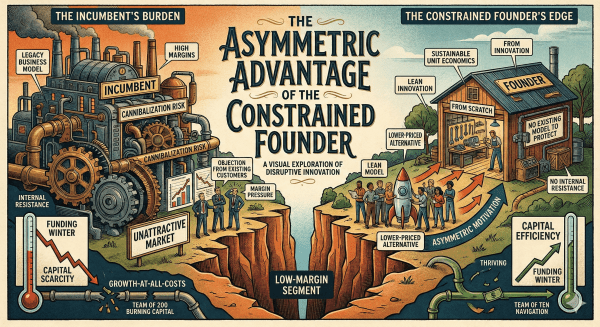
Incumbents retreat during downturns. Markets get abandoned. Segments get underserved. That's not a problem for disruptors — it's their opening
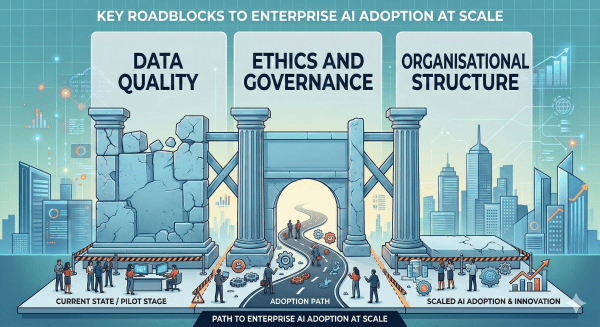
Enterprise enthusiasm for AI is real. So are the three structural barriers preventing it from scaling. Data, ethics, and organisation — here's what's actually in the way.

Ideas are abundant. Capital is scarce. That tension isn't just a funding problem — it's a strategic signal about which innovation frameworks actually work under pressure.

ChatGPT has triggered an entrepreneurial frenzy. Thousands of startups are launching. Most are building wrappers. Here's how to tell the signal from the noise.
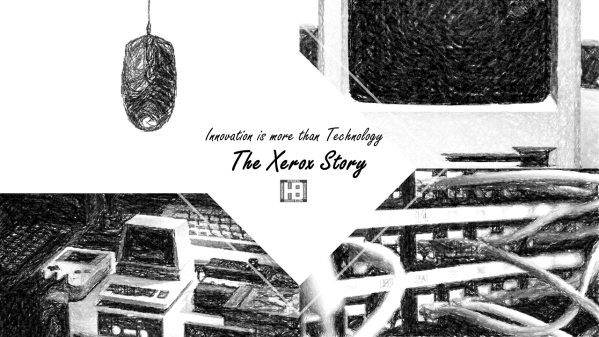
In the 1970s, Xerox's Palo Alto Research Center (PARC) developed the first personal computer, the Xerox Alto. The Alto was the first computer to feature a graphical user interface (GUI) with a mouse and a desktop metaphor, which are now standard features of modern computers. However, Xerox failed to commercialize the technology, and it was instead popularized by Apple, who introduced the Macintosh in 1984. The reason for Xerox's failure was primarily due to the company's focus on its core business of copying and printing, and a lack of understanding of the potential of the personal computer market. Xerox's management at the time did not see the potential of the technology and did not invest in its development. They also did not recognize the potential of the GUI and mouse-based interface, they were more focused on developing the technology for their core business of copying and printing. Additionally, Xerox was not able to capitalize on its innovation because it was not able to create a business model for the personal computer market. The company did not have the distribution and marketing capabilities to compete with companies like Apple and IBM, which had already established themselves in the personal computer market.

James Clear's book isn't really about habits. It's about identity. And once you see it that way, the whole system starts to make a lot more sense.

Ben Horowitz doesn't offer a formula for building a business. He offers something rarer — an honest account of what it actually feels like when the formula runs out.
AI gets the headlines. Data governance does the actual work. Here's why the least exciting discipline in enterprise technology is also the most important one.
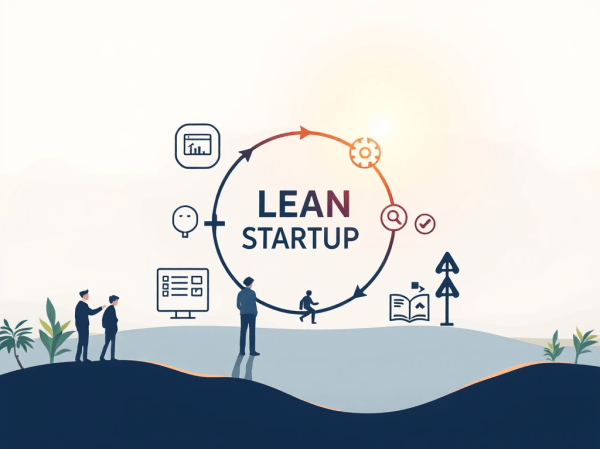
Capital scarcity is doing something useful — forcing founders back to lean discipline. Build, Measure, Learn has never been more relevant than right now.
Most organizations over-invest in incremental improvements and under-invest in transformative ideas. The Innovation Ambition Matrix reveals exactly why — and what to do about it.

Jocko Willink and Leif Babin learned leadership in Ramadi, Iraq — one of the most dangerous places on earth. The principles they brought back turn out to apply almost everywhere else too.

Osterwalder and Pigneur didn't just write about business models — they reinvented how we visualise and challenge them. The Business Model Canvas remains one of the most useful single-page tools in strategy.
Ethereum's transition from Proof of Work to Proof of Stake isn't just a crypto milestone. It's a masterclass in evolving large-scale distributed systems without breaking them.

The debate has shifted from "should we move to cloud?" to "how do we govern multi-cloud complexity?" Cloud-native architecture is now the enterprise baseline — not the edge.

Design thinking is everywhere in 2022. But most organizations skip the one phase that actually matters. Here's where the real innovation breakthroughs happen.

Web3 isn't just NFTs. The real opportunity — and the real challenge — lies in the infrastructure layer. Here's what the technology stack actually reveals in 2022.

The assumption that competitive advantage requires keeping innovation internal is increasingly wrong. The best ideas today live outside organizational boundaries.


 harish.balasubramanian
You must be logged in to post a comment.