The ChatGPT excitement is real — but enterprise value from generative AI looks nothing like a chatbot. Here's where the genuine transformation is already underway.
Beyond the Chatbot Moment: Where Generative AI Is Actually Creating Enterprise Value

Learning is forever
The ChatGPT excitement is real — but enterprise value from generative AI looks nothing like a chatbot. Here's where the genuine transformation is already underway.
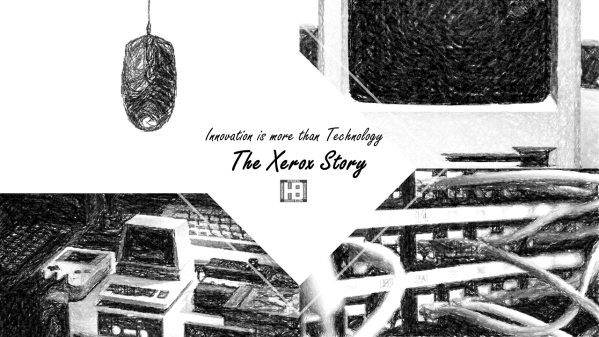
In the 1970s, Xerox's Palo Alto Research Center (PARC) developed the first personal computer, the Xerox Alto. The Alto was the first computer to feature a graphical user interface (GUI) with a mouse and a desktop metaphor, which are now standard features of modern computers. However, Xerox failed to commercialize the technology, and it was instead popularized by Apple, who introduced the Macintosh in 1984. The reason for Xerox's failure was primarily due to the company's focus on its core business of copying and printing, and a lack of understanding of the potential of the personal computer market. Xerox's management at the time did not see the potential of the technology and did not invest in its development. They also did not recognize the potential of the GUI and mouse-based interface, they were more focused on developing the technology for their core business of copying and printing. Additionally, Xerox was not able to capitalize on its innovation because it was not able to create a business model for the personal computer market. The company did not have the distribution and marketing capabilities to compete with companies like Apple and IBM, which had already established themselves in the personal computer market.

James Clear's book isn't really about habits. It's about identity. And once you see it that way, the whole system starts to make a lot more sense.

Ben Horowitz doesn't offer a formula for building a business. He offers something rarer — an honest account of what it actually feels like when the formula runs out.
AI gets the headlines. Data governance does the actual work. Here's why the least exciting discipline in enterprise technology is also the most important one.
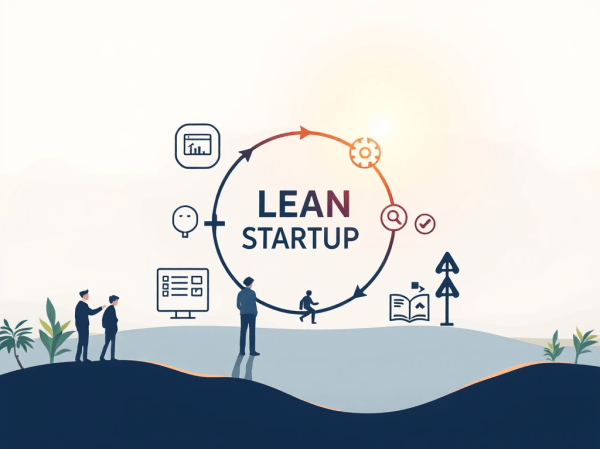
Capital scarcity is doing something useful — forcing founders back to lean discipline. Build, Measure, Learn has never been more relevant than right now.
Most organizations over-invest in incremental improvements and under-invest in transformative ideas. The Innovation Ambition Matrix reveals exactly why — and what to do about it.

Jocko Willink and Leif Babin learned leadership in Ramadi, Iraq — one of the most dangerous places on earth. The principles they brought back turn out to apply almost everywhere else too.

Osterwalder and Pigneur didn't just write about business models — they reinvented how we visualise and challenge them. The Business Model Canvas remains one of the most useful single-page tools in strategy.

Ethereum's transition from Proof of Work to Proof of Stake isn't just a crypto milestone. It's a masterclass in evolving large-scale distributed systems without breaking them.

The debate has shifted from "should we move to cloud?" to "how do we govern multi-cloud complexity?" Cloud-native architecture is now the enterprise baseline — not the edge.

Design thinking is everywhere in 2022. But most organizations skip the one phase that actually matters. Here's where the real innovation breakthroughs happen.

Web3 isn't just NFTs. The real opportunity — and the real challenge — lies in the infrastructure layer. Here's what the technology stack actually reveals in 2022.

The assumption that competitive advantage requires keeping innovation internal is increasingly wrong. The best ideas today live outside organizational boundaries.

Capital is flowing freely, valuations are untethered, and growth trumps profitability. But the smartest founders I know are building like it won't last.

The best innovators aren't chasing every idea — they're managing a disciplined portfolio. Here's the framework separating winners from the rest in 2022

Many enterprises are stuck in AI pilot mode due to three main hurdles: unreliable data stemming from weak governance, a talent shortage in data science, and outdated organizational structures. Successful AI adoption requires treating it as a transformation initiative, investing in data quality, and integrating AI teams with core business functions.

Hsieh didn't just build a shoe company. He built a proof of concept — that culture, not strategy, is the most durable competitive advantage a business can have.

Most people don't have a goal problem. They have an execution problem. The 12 Week Year reframes how time works — and why a year is actually the enemy of getting things done.

I led the InnerSource movement that enabled 200+ applications and built a discovery portal we open-sourced. Here's why it mattered and what it changed about how teams worked.

An annual startup school, 1,000+ participants, a venture challenge, real curriculum, and a chance to get funded. Here's why I built it and what it proved about intrapreneurial culture.

Greg McKeown's Essentialism isn't really about doing less. It's about doing the right things — and having the discipline to protect that choice from everything pulling in the opposite direction.

We built our company's first in-house startup accelerator. Some of those startups became unicorns. Here's what that taught us about the difference between watching innovation and enabling it.

I built and led an intrapreneurship programme that turned employee ideas into funded internal startups. Here's what it took, what it produced, and what it proved about innovation from within.

I built a recognition programme that surfaced hidden talent and celebrated the values that actually drive good organisations. Here's why that mattered more than it might sound.

I established Asia's first Customer Experience Center — a space where CxOs came to reimagine their businesses using emerging technology. It facilitated $124M in sales. Here's how it worked.

Most companies compete harder in markets that are getting more crowded. Blue Ocean Strategy asks a different question entirely: what if you stopped competing and started creating instead?

Every few years, a technology arrives that forces a genuine rethink of what computing can do. Quantum computing is widely described as one of those technologies. It's also one of the most consistently misunderstood — oscillating between breathless hype and dismissive scepticism, sometimes in the same week. So let's try to be precise about what... Continue Reading →
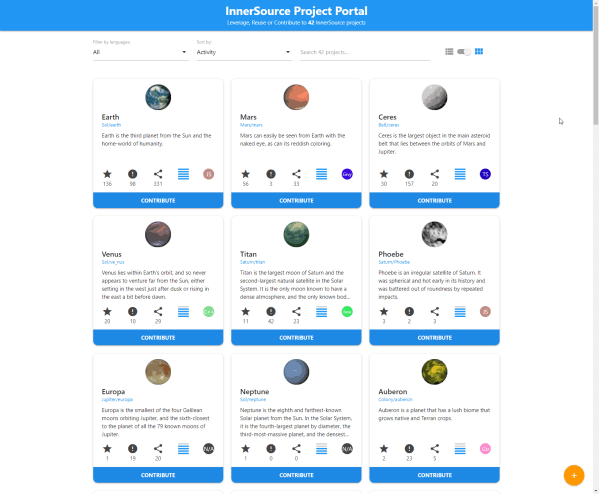
I led the InnerSource movement at SAP, enabling 200+ apps and building a discovery portal we open-sourced. GitHub featured it. Here's why we built it and what it changed.

The content discusses the fundamentals of Bitcoin, emphasizing that understanding money and banking is crucial for grasping its value. Bitcoin offers a decentralized banking system without transaction fees, accessible to anyone with internet. It also highlights the middleman dilemma, where the lack of regulation raises trust issues, while acknowledging the potential for innovation and improved security in the future.


 harish.balasubramanian
You must be logged in to post a comment.