If you’re hiring for AI roles right now, in any industry, you already know the punchline: it’s not getting easier. Open roles keep outpacing qualified candidates, and “AI skills” has quietly become the hardest thing for employers everywhere to find. So why does it feel like the conversation itself has changed?
Because it has. The shortage isn’t shrinking — it’s shape-shifting. The pattern worth noting isn’t “we need less AI talent.” It’s “we need different AI talent than we thought we did,” and that difference looks slightly different in every industry it touches.
The Scientist Isn’t the Bottleneck Anymore
For a while, the archetype of AI talent was singular: the researcher who could design and train novel models from scratch. That person is still valuable — genuinely new model architecture still needs them. But most organizations were never actually trying to build the next foundation model. They were trying to get AI to do something useful inside a business that already existed, with its own workflows, its own regulations, its own version of “we tried something like this before and it didn’t stick.”
That’s where the bottleneck has moved. Fewer companies need someone who can invent a new architecture. Many more need someone who can take an existing model and wire it correctly into a hospital’s intake process, a bank’s underwriting queue, a factory floor’s maintenance system — and have it not fall over the first time reality gets messy.
The Same Shift, Wearing Different Industry Clothes
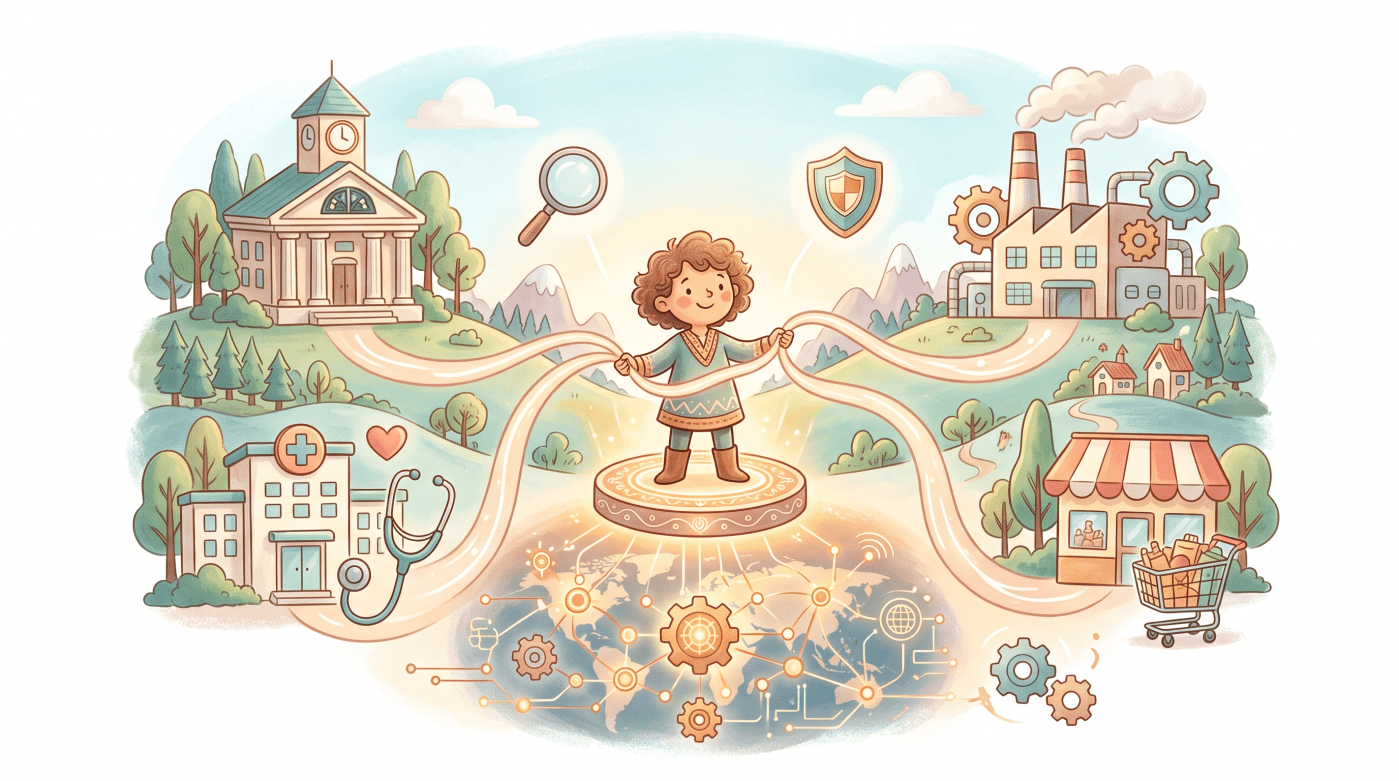
Here’s where it gets genuinely interesting: this isn’t one shortage. It’s the same shape appearing across very different industries, each with its own version of what “integration” actually demands.
In healthcare, the bottleneck is rarely the model — it’s finding someone who understands both clinical workflow and model limitations well enough to know when an AI-generated summary needs a second look. In financial services, it’s less about prediction accuracy and more about someone who can explain, in an audit, exactly why the model made the call it made. In manufacturing, it’s engineers who can get an AI system to survive a shop floor’s actual conditions — dust, downtime, legacy equipment — not just a clean demo environment. Same underlying shift. Three completely different hiring briefs.
A New Kind of Engineer Is Emerging to Bridge the Gap
If you want a concrete sign of how seriously enterprises are taking this integration problem, look at the sudden rise of the forward-deployed engineer. It’s not a rebrand of an existing title — it’s a genuinely new category, and hiring data shows it: postings for the role have grown roughly sevenfold year-over-year.
The job description is telling. A forward-deployed engineer doesn’t sit behind a backlog shipping isolated features. They embed inside a customer’s environment, learn the actual workflow, and build something that works against the messy reality of legacy databases, authentication systems, and compliance requirements — not the clean version that worked in the demo. Major AI labs have started formalizing entire functions around this model, which is itself a signal: even the companies building the frontier models have concluded that deployment, not model quality, is where enterprise AI projects most often stall.
Alongside this, a related skill set has started showing up across hiring conversations: deep, hands-on fluency with AI tools and agentic workflows — not as a credential, but as a way of working.
This Pattern Is Already Showing Up at Scale Inside GCCs
India’s global capability centres are a useful place to watch this shift play out, simply because of the sheer volume involved. The ecosystem now spans thousands of centres and millions of professionals, and AI, data, and automation skills account for the clear majority of newly created roles inside it. That’s not a niche data point; it’s one of the largest live samples anywhere of enterprises trying to solve this exact problem at scale.
What makes it relevant here isn’t headcount, though. It’s the nature of the work. GCCs have long carried a reputation as execution arms and that reputation is shifting fast. Increasingly, they’re becoming the place where the forward-deployed-engineer style of work actually happens: embedding AI into a global enterprise’s real workflows, compliance constraints, and legacy systems, not in a sandbox but in production. Whether that work carries the “forward-deployed engineer” title or not, the job is functionally the same — bridge the model and the reality.
Three Archetypes Doing the Heavy Lifting Now
Strip away the industry-specific flavor and the same three archetypes keep showing up. First: domain experts who understand the actual problem well enough to know where AI genuinely helps versus where it’s theater dressed up as innovation. Second: engineers who care less about model novelty and more about reliability — what happens when the system is wrong, at scale, during the worst possible moment to be wrong. Third: governance-minded people who keep the first two honest, making sure “it works” and “it’s responsible” are discovered to be the same sentence, not two separate conversations six months apart.
None of these three necessarily carries an “AI” job title. A clinician who can sanity-check a model’s output. A compliance officer who understands what a model can and can’t be trusted to decide. A plant engineer who’s never touched a research paper but knows exactly why the demo didn’t survive contact with the factory floor. The demand isn’t sitting in one team anymore — it’s spreading through the org chart, industry by industry, in its own dialect.
The Opportunity Hiding in the Shortage
Here’s the part that should be genuinely encouraging if you’re not a researcher with a decade of publications behind you: this shift opens the door wider, not narrower. Experienced professionals picking up AI tooling inside the industry they already know. Analysts moving from reporting what happened to helping decide what to do about it. Domain fluency is turning into a real on-ramp into AI-relevant work, not just a nice-to-have alongside it.
The conversation worth having inside your own hiring plan is less “do we have enough AI researchers” and more “do we have people who understand the problem, the system, and the risk — together, in our specific industry’s terms.” That’s less a verdict on any single hiring approach and more a question worth revisiting as the shortage keeps shifting shape.
So — is your hiring plan still describing the AI talent problem your industry had a couple of years ago, or the one it actually has now?
Let’s keep learning — together.


Share your thoughts